
A construction worker climbing scaffolding, a warehouse employee moving cartons and a plumber working beneath a kitchen sink all rely on their clothing in different ways. Although their daily responsibilities vary, each needs work pants that allow comfortable movement and withstand the demands of the job.
Choosing suitable work pants for tradies involves more than selecting a familiar brand or preferred colour. Fabric construction, pocket placement, fit and workplace conditions can all influence how practical a garment feels throughout the working day.
Understanding these differences can help Australian workers and employers make more informed purchasing decisions.
What Should You Look for When Choosing Work Pants?
The most suitable work pants provide a practical balance of durability, comfort and functionality for the tasks being performed.
Before comparing styles, consider these important features:
- Fabric construction: Choose materials suited to regular movement, friction and workplace conditions.
- Freedom of movement: Ensure the pants allow comfortable bending, squatting, walking and climbing.
- Pocket arrangement: Look for storage that accommodates everyday essentials without restricting movement.
- Seam quality: Check stitching and areas likely to experience repeated strain.
- Waistband and leg fit: Select a fit that stays comfortable during extended wear.
- Workplace requirements: Confirm whether specific coverage, reflective features or protective clothing is necessary.
Rather than assuming one design suits every occupation, match the garment's features to the activities performed most frequently.
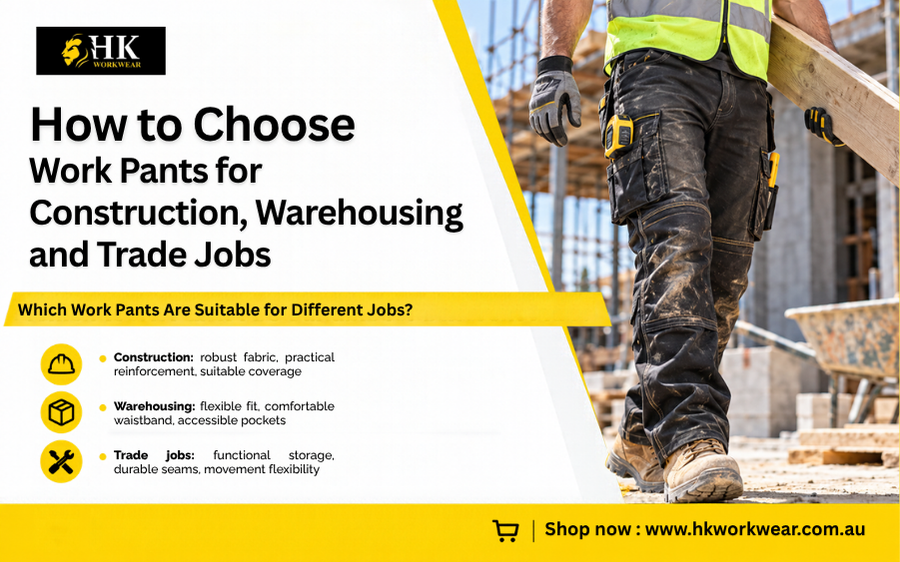
Which Work Pants Are Suitable for Different Jobs?
Construction, warehousing and trade occupations place different demands on clothing. Identifying these differences is a useful starting point when selecting everyday work pants.
Work Pants for Construction Workers
Construction environments often involve contact with rough surfaces, repeated kneeling, climbing and carrying equipment.
Pants made from robust fabrics, such as suitable cotton drill or reinforced blends, may be practical for general construction activities.
Workers should consider garments with secure pockets, appropriate leg coverage and sufficient room around the knees.
For tasks involving frequent kneeling, reinforced knee areas or manufacturer-approved kneepad arrangements may provide additional practicality. However, ordinary reinforcement should not be confused with certified protective equipment.
Visibility requirements also vary between construction sites. If reflective or high-visibility garments are required, check the relevant workplace rules and the product's stated compliance information before purchasing.

Work Pants for Warehouse Workers
Warehouse employees may spend substantial portions of their shifts walking between storage areas, bending to handle goods or operating equipment.
Comfortable waistbands and flexible fabrics can be particularly useful where frequent movement is involved.
Cargo-style pockets may provide convenient storage, although bulky pocket contents can become uncomfortable when sitting or working around machinery.
For warehouse roles, consider the working environment as well as the garment design. Staff operating in temperature-controlled storage areas may have different clothing needs from employees working in warm loading bays.
Work Pants for Tradespeople
Electricians, plumbers, carpenters and maintenance technicians often work in confined spaces or change positions repeatedly.
Some workers prefer cargo pants with accessible compartments for small accessories, while others favour a simpler design that reduces unnecessary bulk.
Stretch fabrics may be useful when crouching, reaching or moving between standing and kneeling positions.
The appropriate choice also depends on workplace hazards. For example, electrical or heat-related tasks may require specialised protective clothing rather than standard everyday work pants.
Quick comparison of work pant requirements
|
Job Type |
Useful Features |
Main Consideration |
|
Construction |
Robust fabric, practical reinforcement, suitable coverage |
Rough surfaces and site requirements |
|
Warehousing |
Flexible fit, comfortable waistband, accessible pockets |
Frequent movement |
|
Trade jobs |
Functional storage, durable seams, movement flexibility |
Task-specific practicality |
Which Work Pant Fabrics Offer Durability and Comfort?
Material selection affects how work pants feel, move and respond to regular use.
Different fabrics offer different characteristics, so it is worth understanding the available options before purchasing.
Cotton Drill
Cotton drill is recognised for its structured weave and is commonly used in traditional work trousers.
Its suitability depends on fabric weight, garment construction and the conditions in which it will be worn.
Heavier cotton drill may appeal to workers seeking a substantial fabric, although it can feel warmer than lighter alternatives.
Ripstop Fabric
Ripstop fabric uses a reinforcing weave pattern designed to help limit the spread of certain tears.
This can be useful for clothing exposed to occasional snags or demanding everyday activities.
However, ripstop construction does not make a garment tear-proof, and abrasion resistance depends on the particular material.
Stretch Fabric Blends
Stretch work pants are designed to provide additional flexibility through their fabric composition or construction.
They can be practical for workers who regularly squat, bend or climb.
When comparing durable work pants, consider overall garment construction alongside fabric type. Strong seams, appropriate fit and reinforced wear areas can be just as important as the material itself.
How Important Are Fit and Flexibility in Work Pants?
Even well-constructed pants may become uncomfortable when the fit does not accommodate everyday movement.
A waistband that feels comfortable while standing may become restrictive when sitting, while excessively long trouser legs can create practical difficulties around footwear.
Before choosing a size, check the manufacturer's measurements and consider how the garment should fit over the clothing or protective equipment normally worn at work.
When trying on work trousers, perform a few movements that resemble ordinary job activities:
- Squat and bend to check knee and thigh movement.
- Sit down to assess waistband comfort.
- Walk and take a step upwards to test leg flexibility.
- Check whether pockets remain accessible.
- Confirm that the trouser length works with suitable work footwear.
A comfortable fit should allow natural movement without excessive tightness or loose fabric that could catch on equipment.
Should You Choose Work Pants or Work Shorts?
The choice between full-length pants and shorts depends on the workplace environment, the tasks being performed and applicable clothing requirements.
Work shorts may offer a lighter option for certain roles in warm conditions, particularly where full-leg coverage is not required.
However, long pants provide greater coverage from sunlight, minor surface contact and general workplace exposure.
That coverage should not be mistaken for protection against hazards such as sparks, molten metal or chemicals. Such risks require clothing selected through an appropriate workplace risk assessment.
Construction workers should also check site-specific rules before choosing shorts, as some workplaces require long trousers.
The best approach is to prioritise workplace suitability rather than making a decision based on temperature alone.
How Can You Make Work Pants Last Longer?
Regular maintenance can help preserve the appearance and usability of work trousers.
Start by following the care instructions supplied with each garment, as different materials and protective features can have different washing requirements.

A few practical habits include:
- Empty pockets before washing to prevent damage from forgotten tools or small objects.
- Inspect seams and high-wear areas for signs of deterioration.
- Follow recommended washing temperatures and drying methods.
- Avoid using unsuitable cleaning chemicals on specialised fabrics.
- Replace garments when damage affects their function or required protective performance.
Workers who regularly handle abrasive materials may experience faster fabric wear than those performing lighter warehouse activities.
For this reason, garment replacement should be based on condition and workplace needs rather than a fixed schedule alone.
Explore Practical Workwear Options at HK Workwear
HK Workwear is an Australian-owned and operated workwear retailer offering clothing for different industries and everyday workplace requirements.
Its range includes cotton drill trousers, cargo styles, stretch designs, ripstop options, reflective-tape pants and work shorts.
Rather than selecting clothing solely by appearance, customers can compare available product descriptions, fabric specifications and sizing information to identify garments that match their responsibilities.
Whether you are purchasing for yourself or comparing uniforms for employees, HK Workwear offers a selection of workwear pants covering different fits, materials and practical features.
Review individual product specifications carefully, particularly where your workplace has specific clothing or protective requirements.
Frequently Asked Questions
What type of pants are best for construction work?
Construction workers generally benefit from trousers that provide appropriate leg coverage, robust construction and sufficient movement around the knees and waist. The best choice depends on the tasks, working environment and site-specific clothing requirements.
Are stretch work pants suitable for tradespeople?
Stretch work pants can be suitable for trades involving frequent bending, crouching or climbing. However, workers should check whether the fabric and garment construction are appropriate for their specific tasks and any relevant safety requirements.
What is the difference between cargo pants and regular work pants?
Cargo pants generally have additional pockets designed for carrying small everyday items. Regular work pants may offer a simpler design with fewer storage compartments. The preferred option depends on how much accessible storage the worker needs.
Are cotton drill pants suitable for warehouse work?
Cotton drill trousers can be suitable for warehouse environments, particularly where workers prefer structured, hard-wearing clothing. However, employees performing frequent bending or walking may also want to compare flexible or stretch-fabric alternatives.
How often should work pants be replaced?
There is no universal replacement period for everyday work trousers. Inspect them regularly for torn fabric, damaged seams, reduced functionality or excessive wear. Protective garments should also be replaced according to applicable manufacturer instructions and workplace requirements.
Final Thoughts
Choosing the right work pants begins with understanding the work itself. Construction workers may prioritise robust fabric and coverage, warehouse employees often need flexibility for repeated movement, and tradespeople may place greater value on practical storage and unrestricted mobility.
Consider how the trousers fit, how the material performs and whether the design meets the needs of the working environment.
Taking the time to compare these factors can help workers select clothing that remains practical and comfortable throughout their usual responsibilities.