
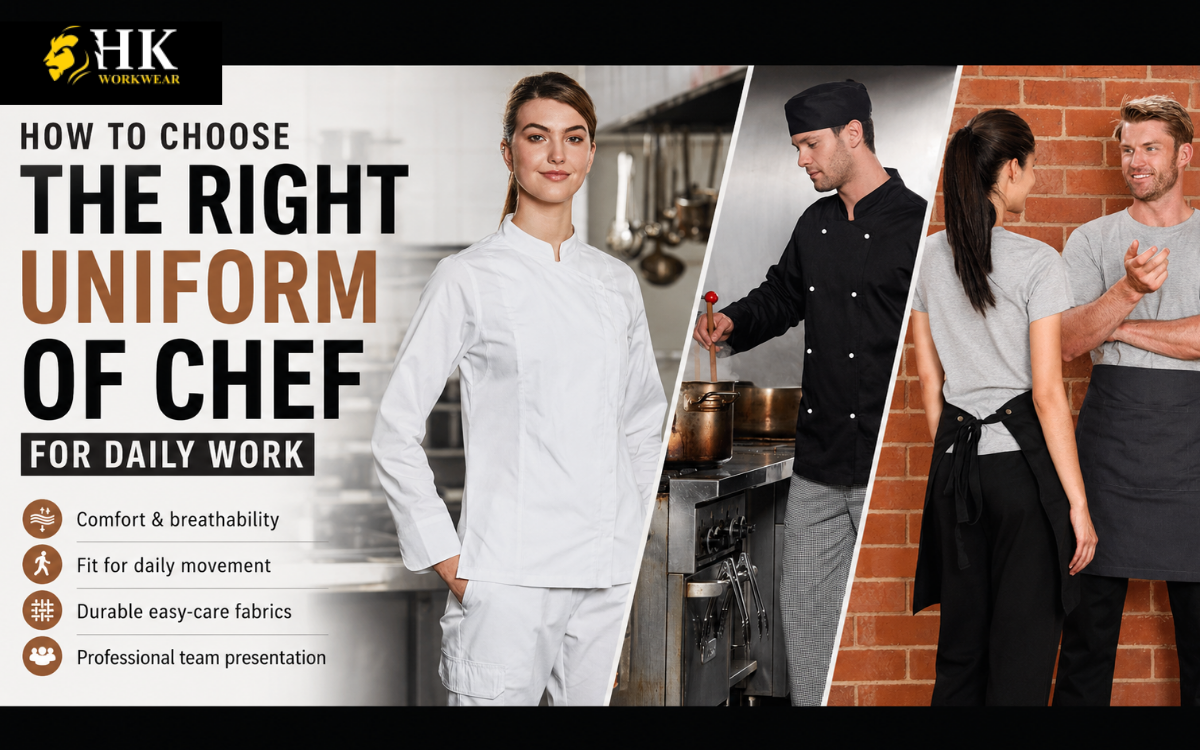
A commercial kitchen is a fast-moving workplace where comfort, hygiene, safety and presentation all matter. Choosing the right uniform of chef is therefore about much more than appearance. The clothing must support long shifts, constant movement, warm working conditions and regular washing while helping the wearer look clean and professional.
The right uniform can also improve team consistency and make daily work more practical. Whether you are a head chef, apprentice, kitchen assistant, café owner or hospitality manager, the following factors will help you select suitable chef clothes for everyday use.
Why the Right Chef Uniform Matters
Suitable chef clothing can help workers:
- Move comfortably during busy service periods
- Stay presentable throughout a long shift
- Manage warm kitchen conditions
- Maintain a consistent team appearance
- Carry small work essentials where required
- Meet workplace dress and hygiene expectations
Match the Uniform to the Kitchen Role
Different hospitality roles may require different clothing.
Head Chefs
Head chefs often need a jacket that looks structured and professional while remaining comfortable. A clean, well-fitted design can help identify senior staff and create a polished appearance in open kitchens.
Line Cooks and Kitchen Assistants
Employees working around grills, fryers and preparation benches usually need durable garments that support frequent movement. Practical trousers, breathable jackets and washable aprons are important considerations.
Bakers and Pastry Chefs
Bakers may prefer lighter garments because they often work near ovens. Flexible clothing is also useful when lifting trays, shaping dough and moving between workstations.
Catering Staff
Catering employees may work in both food preparation and customer-facing service. Their clothing should be neat enough for presentation while remaining practical for setup, serving and cleaning.
Choose a Suitable Chef Jacket
The chef jacket is one of the most recognisable parts of the uniform. When comparing options, consider sleeve length, fastening, ventilation, fabric weight and overall fit.
Long sleeves provide more coverage, while short sleeves may feel cooler in warm environments. Hidden studs or secure buttons can create a neat front and make the garment easier to manage. Lightweight panels or ventilation features may also help improve airflow.
The jacket should allow reaching, lifting and bending without pulling across the shoulders. Use the supplier’s size guide and compare it with actual body measurements rather than relying only on a normal casual-clothing size.
Select Comfortable Chef Pants
Chef pants must support standing, walking and bending for extended periods. Drawstring or flexible waist designs can provide additional comfort during long shifts.
Look for:
- A secure and comfortable waistband
- Enough room through the seat and legs
- Useful pockets
- Durable but manageable fabric weight
- A safe length that does not drag
- A colour or pattern suited to the workplace
Traditional check patterns can make minor marks less noticeable, while black pants offer a simple and versatile appearance.
Consider Fabric and Care Requirements
Fabric affects how chef clothes feel, perform and respond to regular washing. Cotton-rich materials may offer softness and breathability, while blended fabrics can provide durability, shape retention and easier care.
When selecting chef clothes, consider how often each garment will be washed. Kitchen uniforms should remain presentable after repeated use, so colour retention, seam strength and care instructions are important.
Useful fabric qualities include:
- Breathability
- Durability
- Easy-care performance
- Softness against the skin
- Colour retention
- Flexibility for movement
Always check the care label before purchasing. Garments that require complicated maintenance may not be practical for a busy hospitality team.
Add the Right Apron
An apron provides an extra working layer and can help keep the main uniform cleaner during food preparation and service. The best design depends on the role and the amount of coverage needed.
Full-bib aprons cover more of the front of the body and suit general kitchen work. Waist aprons may be more appropriate for serving staff or roles requiring less upper-body coverage. Cross-back styles can distribute pressure differently from neck-strap designs, which may improve comfort for some wearers.
Adjustable straps, strong seams and accessible pockets can make an apron more practical. Its colour should also coordinate with the rest of the team uniform.
Include Appropriate Headwear
Chef hats, caps and hair-control accessories support a tidy workplace appearance and may form part of a kitchen’s hygiene procedures. Select headwear that fits securely without feeling overly tight or interfering with movement.
Priorities Fit and Movement
A chef uniform should allow normal kitchen movements without bunching, pulling or restricting the body. Staff may need to reach overhead, bend to low storage areas, carry containers and move quickly between benches.

Before ordering:
- Measure the chest, waist, hips and inside leg.
- Compare measurements with the product size chart.
- Consider any base layers worn underneath.
- Check that sleeves do not interfere with the hands.
- Make sure pants remain secure during movement.
- Test one garment before ordering for a full team.
For a mixed workforce, consider different cuts and fits instead of assuming one unisex garment will suit everyone.
Coordinate the Uniform with Your Brand
Chef uniforms may be visible to customers, particularly in open kitchens, cafés and catering environments. Consistent colours and styles can make the team look organised and professional.
Logo embroidery or printing can also create a unified look. Keep branding clear and simple so the garment remains professional.
Plan for Multiple Sets and Replacements
Commercial kitchen clothing is washed frequently, so one set per employee may not be enough. Providing multiple garments can help staff begin each shift in clean, presentable clothing.
A practical plan may include:
- Two or more jackets or shirts
- At least two pairs of chef pants
- Several washable aprons
- Spare sizes for new or temporary workers
- A record of approved colours and styles
Keeping staff measurements and product details on file can make future replacement orders easier.
Why Choose HK Workwear?
HK Workwear provides a broad hospitality range that includes chef jackets, pants, aprons, hats, shirts, jerkins and food-industry garments. This selection allows individual chefs and hospitality managers to compare essential pieces and build a coordinated outfit for different kitchen responsibilities.
When choosing chefs workwear, businesses can consider garments for different roles, body shapes and presentation requirements. HK Workwear brings core uniform pieces and useful accessories together, making it a practical option for both individual purchases and team uniform planning.
Final Thoughts
Choosing the right chef uniform requires a balance of comfort, fit, durability, hygiene and professional presentation. Begin with the wearer’s daily tasks, then assess the jacket, pants, apron, headwear and fabric as one complete working outfit.
Well-selected chef clothes should allow easy movement, withstand regular laundering and remain comfortable during demanding shifts. Careful measuring, practical fabric choices and enough replacement sets can help create a reliable uniform system for chefs and hospitality teams.